Ever Wondered About the Real Hydraulic Jack Working Principle?
Struggling to understand how a simple tool lifts tons? This lack of clarity can be unsafe. Let's break down the core principle that makes the heavy lifting feel so easy.
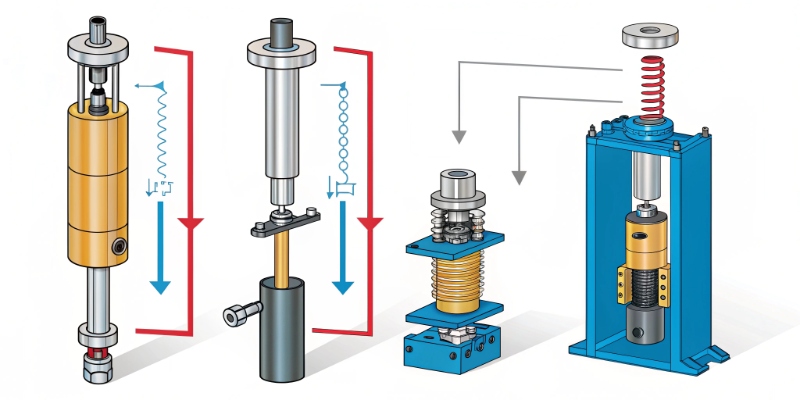
A hydraulic jack works by using Pascal's principle. A small force you apply to a pump handle pressurizes an incompressible fluid. This pressure is then transmitted to a much larger piston, multiplying the force significantly to lift very heavy objects with minimal effort.
It sounds simple, and in many ways, it is. But this core concept is the foundation for everything, from safe operation to proper maintenance. I learned early in my career that you can't truly master a tool until you respect the science behind it. Understanding this principle transforms how you approach the entire task of lifting something heavy. To really get a grip on it, we need to look at each part of the process. Let's start with the most basic question.
How Does a Hydraulic Jack Actually Work?
Seeing a tiny pump lift a massive object can seem like magic. Without understanding the science behind it, you're essentially just guessing, which is never a safe practice. It's all about a simple law of physics that's easy to grasp.
A hydraulic jack uses Pascal's Law. Your effort on the handle moves a small pump piston, which creates pressure in the hydraulic fluid. This pressure acts on a much larger piston, multiplying the force and lifting the heavy load attached to it.
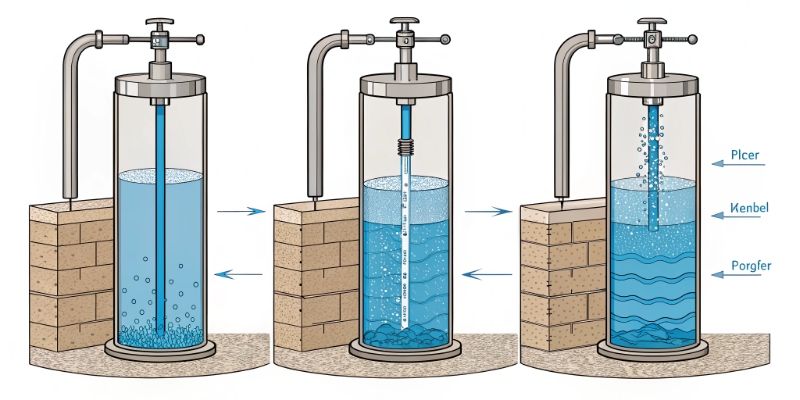
Let's dive a little deeper into this. The heart of the jack is Pascal's Law, which states that pressure applied to a contained fluid is transmitted equally in all directions. Think of it as a force multiplier. The formula looks like this: Force 2 = Force 1 * (Area 2 / Area 1). Here, Area 1 is the small pump piston, and Area 2 is the large lifting ram. Because the lifting ram's area is so much larger, the initial force you apply is multiplied massively.
When I first started in the factory, I was amazed by this. It's a real-world lesson in leverage. But I quickly learned that the system is only as good as its weakest link: the fluid. If the fluid is low, has air bubbles, or is dirty, the system becomes "spongy" and unreliable. The jack might fail to lift smoothly or could even drop. This is why I always stress that checking the fluid and bleeding the system of air is not just maintenance—it's a critical safety check before you trust it with a heavy load.
How Do You Calculate a Hydraulic Jack's Capacity?
You see the "2-ton" or "10-ton" rating on a jack, but what does that really mean? Simply ignoring this number or guessing can lead to overloading the jack, which is a perfect recipe for catastrophic failure. Let's look at the simple factors that determine a jack's true power.
A jack's capacity is determined by its design, combining the system's maximum safe pressure and the area of the main lifting piston. The formula is: Lifting Capacity = Maximum Pressure × Area of Lifting Piston. This is calculated by manufacturers, so always trust the stated rating.
The manufacturer does the hard math for you, but understanding the variables is important for respecting the tool's limits.
The Factors Behind the Rating
- Maximum Pressure (P): This is the highest pressure the fluid can reach before a safety feature, called a pressure relief valve, kicks in. This limit is set based on the strength of the cylinder walls and, most importantly, the seals that contain the pressure. Pushing beyond this is asking for a blowout.
- Area of the Lifting Piston (A): This is the surface area of the main ram that rises to lift the load. For the same amount of pressure, a ram with a larger surface area will produce a greater lifting force.
Here is a simple table to show the relationship:
| Piston Area (A) | Max Pressure (P) | Resulting Lifting Force |
|---|---|---|
| Small | Normal | Moderate |
| Large | Normal | High |
| Large | High | Very High |
Over the years, I've seen people try to push a jack beyond its rated capacity. It is one of the most dangerous things you can do in a workshop. The relief valve is there to prevent a disaster, but if it activates, it means you've already made a serious mistake. My rule is simple: always choose a jack rated for at least 1.5 times the weight you plan to lift.
So, How Does a Hydraulic Jack Lift Something as Heavy as a Car?
Lifting a two-ton car with a few easy pumps of a handle feels almost impossible. This can make you wonder if the jack is truly secure and up to the task. Let's walk through the step-by-step process that turns your small effort into massive lifting force.
When you pump the jack's handle, it moves hydraulic fluid from a reservoir into the main cylinder. Since the fluid can't be compressed, it forces the large lifting ram upwards against the car's frame. This powerful multiplication of force easily overcomes the car's weight.
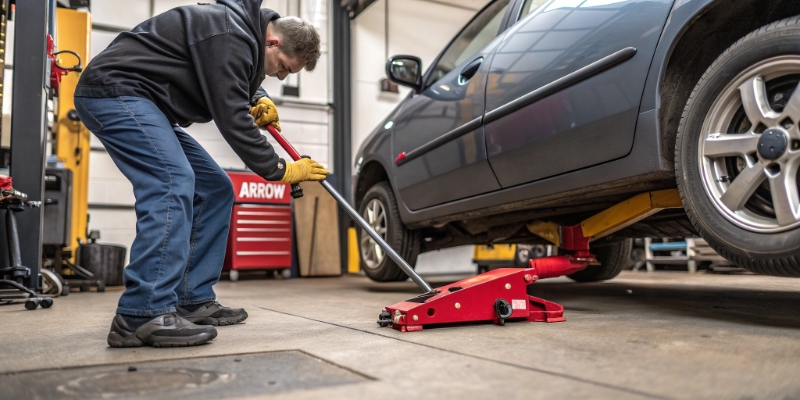
This is where all the principles come together in a practical action. The process is a clear sequence of events:
- Pumping the Handle: You apply a small force to the handle. This leverage pushes down a small pump piston inside the jack.
- Building Pressure: This action forces hydraulic fluid through a one-way check valve and into the main cylinder chamber. With each pump, more fluid is added, building pressure.
- Force Multiplication in Action: That pressure pushes on the entire surface of the large lifting ram. Because the ram's area is so much bigger than the pump piston's, the upward force is multiplied immensely. This is what allows your moderate pumping effort to overcome the immense weight of the car.
However, this is the part I need to emphasize the most: the jack is relying on fluid pressure held in by seals. Seals can wear out, get damaged, or fail without warning. That's why I've learned that a jack's job is only to get the vehicle into the air. The job of keeping it there safely belongs to a good pair of jack stands. Once the car is at the right height, you must place jack stands under a solid point of the frame. This distinction between lifting and holding is not just a best practice; it's a non-negotiable safety rule in my workshop.
What Are the Three Main Components of a Hydraulic Jack?
Is your jack acting up? Not knowing the main parts makes it impossible to know what's wrong. Let's break it down into three simple systems so you can identify problems.
The three main components are the pump assembly (handle and small piston), the hydraulic system (reservoir, fluid, and pistons), and the release valve. These parts work together to convert your small effort into a powerful lifting force and then safely lower the load.
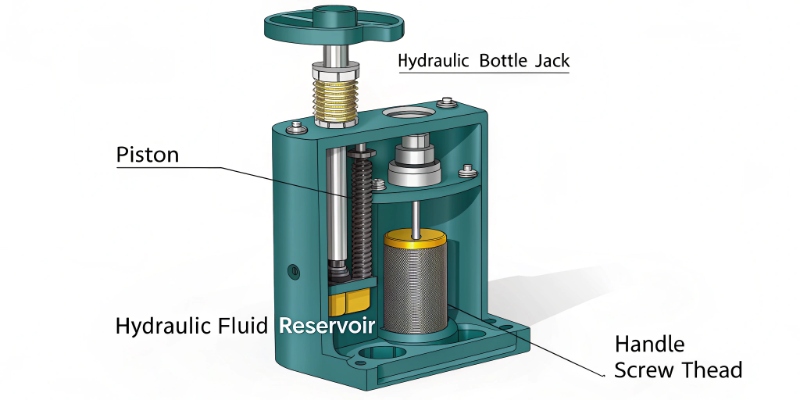
Let's dive deeper and look at what each component does. Understanding their individual roles is key to both using the jack correctly and diagnosing any problems that arise. If your jack feels spongy or won't hold pressure, knowing which part is responsible helps you fix it or decide if it's time for a replacement.
The Key Groups of Parts
| Component | Function |
|---|---|
| Pump Assembly | Converts your manual effort into initial fluid pressure. |
| Hydraulic System | Contains the fluid and uses its pressure to multiply force and lift the ram. |
| Release Valve | Controls the release of pressure to safely lower the load. |
The Pump Assembly is what you interact with. It includes the handle, its linkage for leverage, and the small pump piston. Your effort starts here. The Hydraulic System is the core. It has the fluid reservoir, the main cylinder, the large lifting ram, and the incompressible hydraulic fluid. The seals in this system are critical for holding pressure. Finally, the Release Valve gives you control. Tightening it seals the system to build pressure. Slowly opening it lets fluid return to the reservoir, safely lowering the jack.
Conclusion
Hydraulic jacks masterfully use Pascal's Law to multiply force. Understanding this, checking your fluid, respecting capacity, and always using jack stands are the keys to safe and effective lifting.